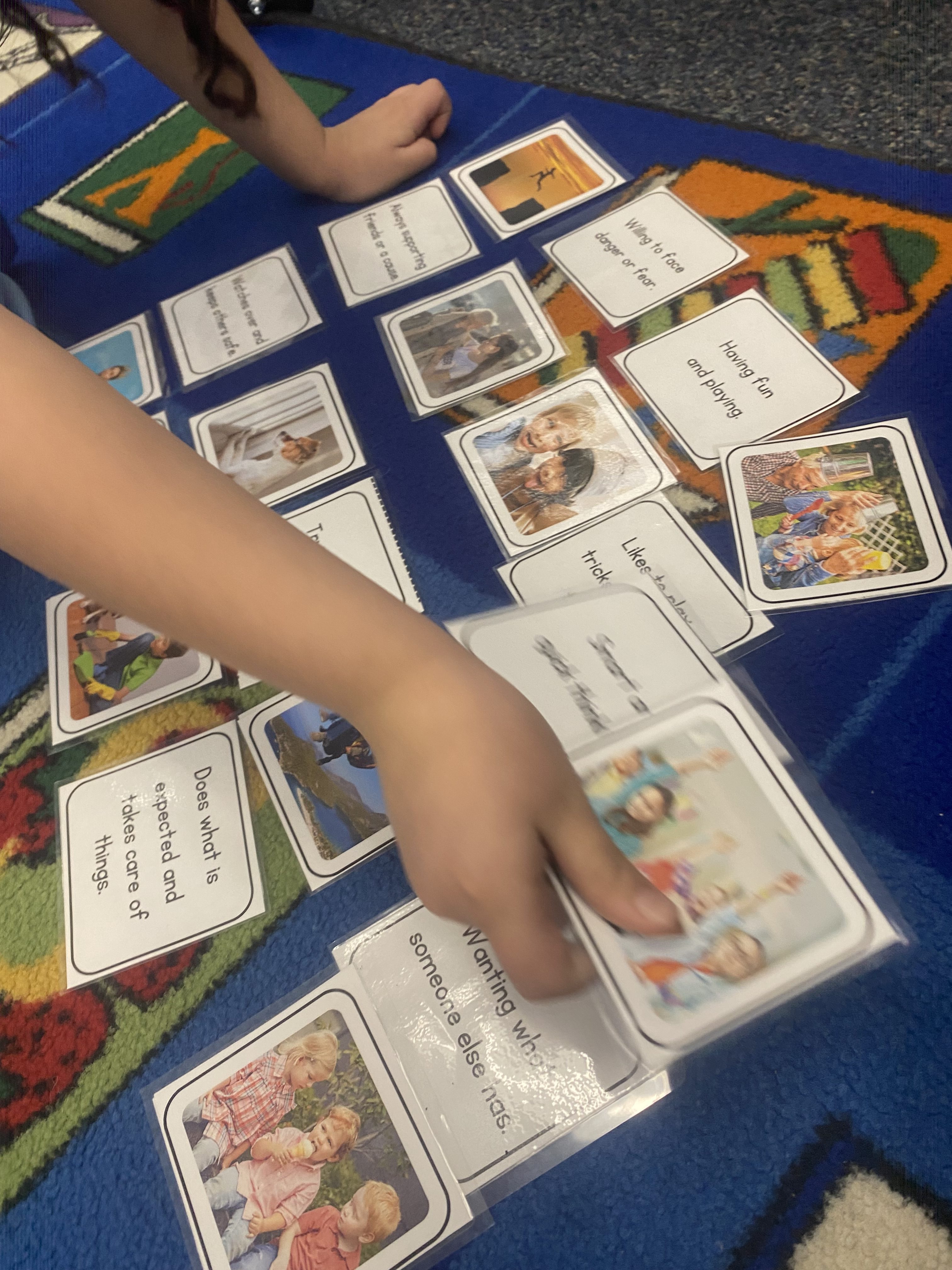
When it comes to teaching vocabulary, context is everything, which is why Peter Pan is an incredible book for helping students expand their language skills. The classic story is filled with rich, descriptive words that students don’t often hear in daily conversations like courageous, mischievous, protective and loyal. Instead of using boring, dry word lists, playing with vocabulary brings it to life. Hands on and creative strategies make learning fun and meaningful.


Building Vocabulary with Peter Pan
Vocabulary is more than just memorizing definitions—it’s about understanding and using words in context. In Peter Pan, students encounter a variety of multi-syllabic and descriptive words that enhance their comprehension skills. To make vocabulary stick, I use:
- Visual images to project or print (flashcards) to help students connect words with definitions.
- Sentence frames that allow students to practice using new words in meaningful ways.
- Read-aloud discussions where we pause to analyze new words and their meanings within the story.
This approach helps students see, hear, and use vocabulary in multiple ways, reinforcing their learning.
Exploring Character Traits in Peter Pan
Peter Pan also provides a great opportunity to explore character traits. Understanding a character’s actions and motivations helps students deepen their reading comprehension. But instead of just listing traits, interactive learning allows them to connect to words in a deeper and more meaningful way. For ESL students, speaking the words in different ways, gives the students more confidence. Retention is also more evident as the lessons progress. Using the resource in a variety of ways allows for practice in the domains that sometimes feel most difficult; speaking and listening.
- Sorting Activities – Students categorize characters based on their traits. Is Peter reckless or brave? Is Captain Hook vengeful or fearful? These discussions help students think critically about characters’ personalities.
- Sentence Starters – Using structured sentence frames, students describe characters in their own words. For example, “Wendy is nurturing because she takes care of the Lost Boys.”
- Real-Life Connections – We compare character traits to real people. Who in their life is loyal or jealous like Tinker Bell? Who shows responsibility like Wendy? Making these connections makes the lesson more relatable.

ESL Strategies for Teaching Peter Pan
For ESL learners, structured support is essential. Peter Pan introduces advanced vocabulary, so I provide scaffolding to help them feel confident using new words.
- Matching activities – Review words and definitions prior to worksheet work.
- Sentence frames – Providing structured sentence starters helps students express their thoughts clearly.
- Partner discussions – Practicing vocabulary in small groups builds speaking confidence.
With these strategies, even hesitant speakers can explain why the Lost Boys are rebellious or why Captain Hook is selfish and greedy.
Making Language Learning an Adventure
Teaching vocabulary and character traits through Peter Pan makes learning an adventure. When students actively engage with words instead of just memorizing them, they retain knowledge longer.
Are you teaching Peter Pan in your classroom? Let me know in the comments how you make vocabulary and character traits exciting for your students!
Check out these engaging resources here!
Explore character traits activities for Peter Pan!


