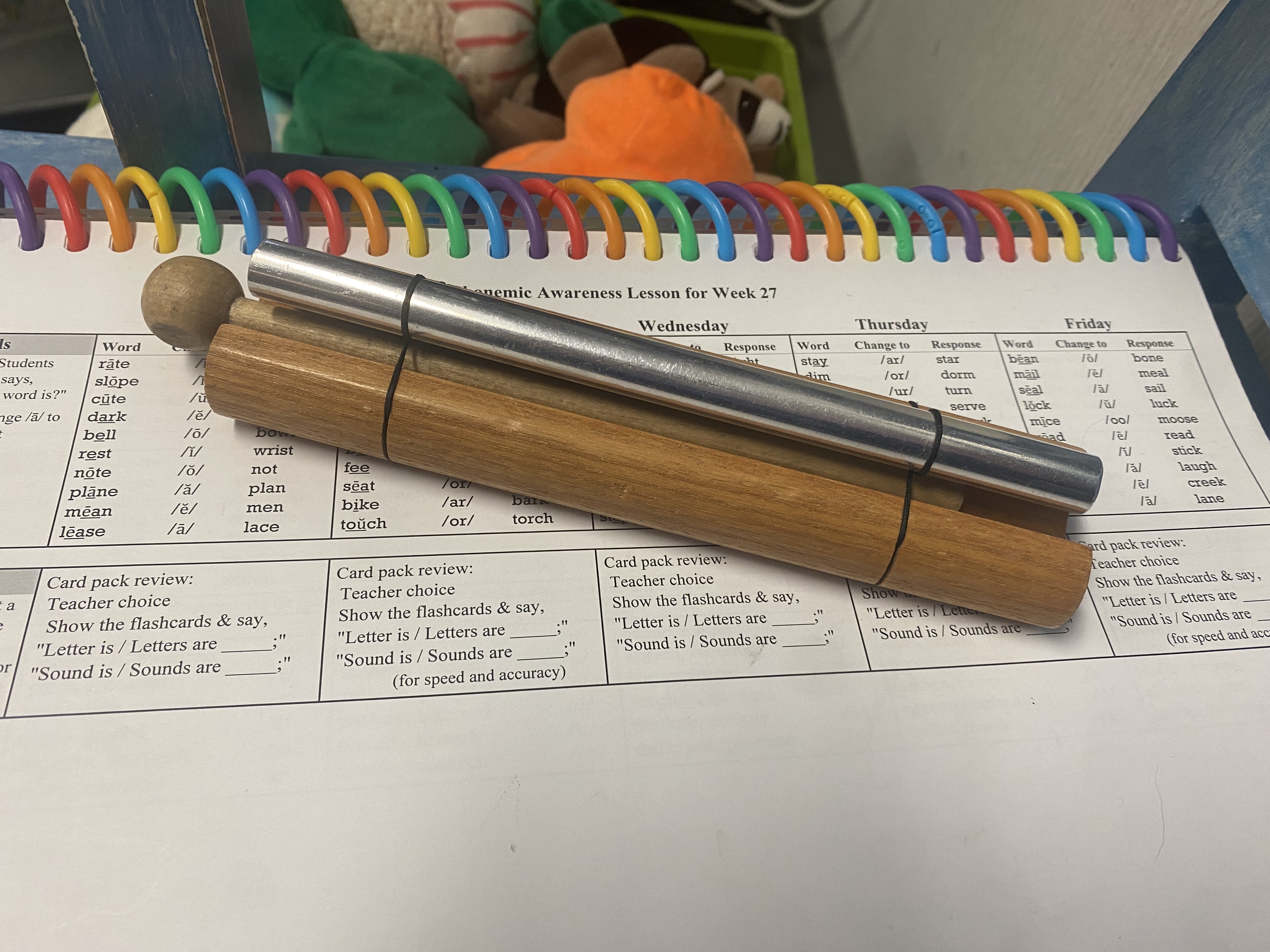
Controlling classroom noise level has been the bane of my existence from the beginning of my teaching career. I don’t mind noise. In fact, I kind of like it. My ADHD brain appreciates the zippiness of all of the voices at once. For a long time I wondered if maybe I was hard of hearing. But I had the ears checked, and it turned out my hearing was fine.
So, the noise in my classroom didn’t bother me. And it didn’t seem to bother the kids. Kids are loud. If you let them be.
The Turning Point: Co-Teaching and New Techniques
But it bothered my Principals, and it was always a “developing area” on my teacher observations. I honesty didn’t think I’d ever get it sorted, which bummed me out and affected my perception of my teaching. I considered that maybe I was just bad at classroom management. Except that I wasn’t. My kids were learning. I’d built amazing relationships. And my data looked good. Still, I wanted to be proficient in this area more than you could even imagine.
Post Covid, I was teaching at a non-profit charter that did a lot of things differently including conjoining classes under a co-teaching model. I’d never co-taught before, certainly not with 34-40 kids in one room, and it helped to open my eyes to the ways I was great, and the places I needed to grow. Collaborating in a safe space allowed growth to happen. Another day I’ll share the pros and cons that come with co-teaching. It deserves its own post.
My co-teacher was (and is) a master at management. Our students were already familiar with the Responsive Classroom technique of using the chime to bring attention. Ms. Lyndsey believed that using visual stop lights would work if we paired them with proper coaching.
The Formula for a Volume Controlled Classroom
The formula: ring the chime to bring attention, use the stop lights as the visual reminder, explicitly direct students to the expectation, be ok with lots and lots of practice.
Explicit Teaching and Practice
Through modeling, we frequently stopped and restarted with phrases like “let’s go back and try that again” and reminders like “now we’re on level zero” to manage noise levels effectively. Over time, the kids understood the expectations. When noise levels were off, we paused to reassess. Sometimes it indicated they were ready to move on; other times, it meant they were too excited. Explicitly teaching these boundaries created a workable system. After years of experimenting with various methods like voice signals, rhythmic clapping, and jumping balls on screens, this approach proved to be the most effective.
Finally.
The Results: A Quieter, More Productive Classroom
Toward the end of the year I walked in our room to the most lovely hum of working seven years old I’d ever heard or seen. All 34 were working diligently on their activities, whispering to each when help was needed, so quietly it made me stop … and smile
As a side note, and an observation I’ve had a lot over the years of post Covid teaching is that many of my students have serious issues with loud noises, inside of the classroom and out. So much so that we invested in noise canceling headsets that kids could take when needed. I don’t know if it was the conjoined classes (likely), but managing noise is an issue that I needed to tackle. Giving all students a classroom that is controlled in every way is a gift. How you get there doesn’t have to be a maze of trial and error.
Ms. Martha


The buttons came from Amazon, but I think we bought the voice level images on TPT.

Found these on Etsy and think they could work great if you don’t have other visuals.