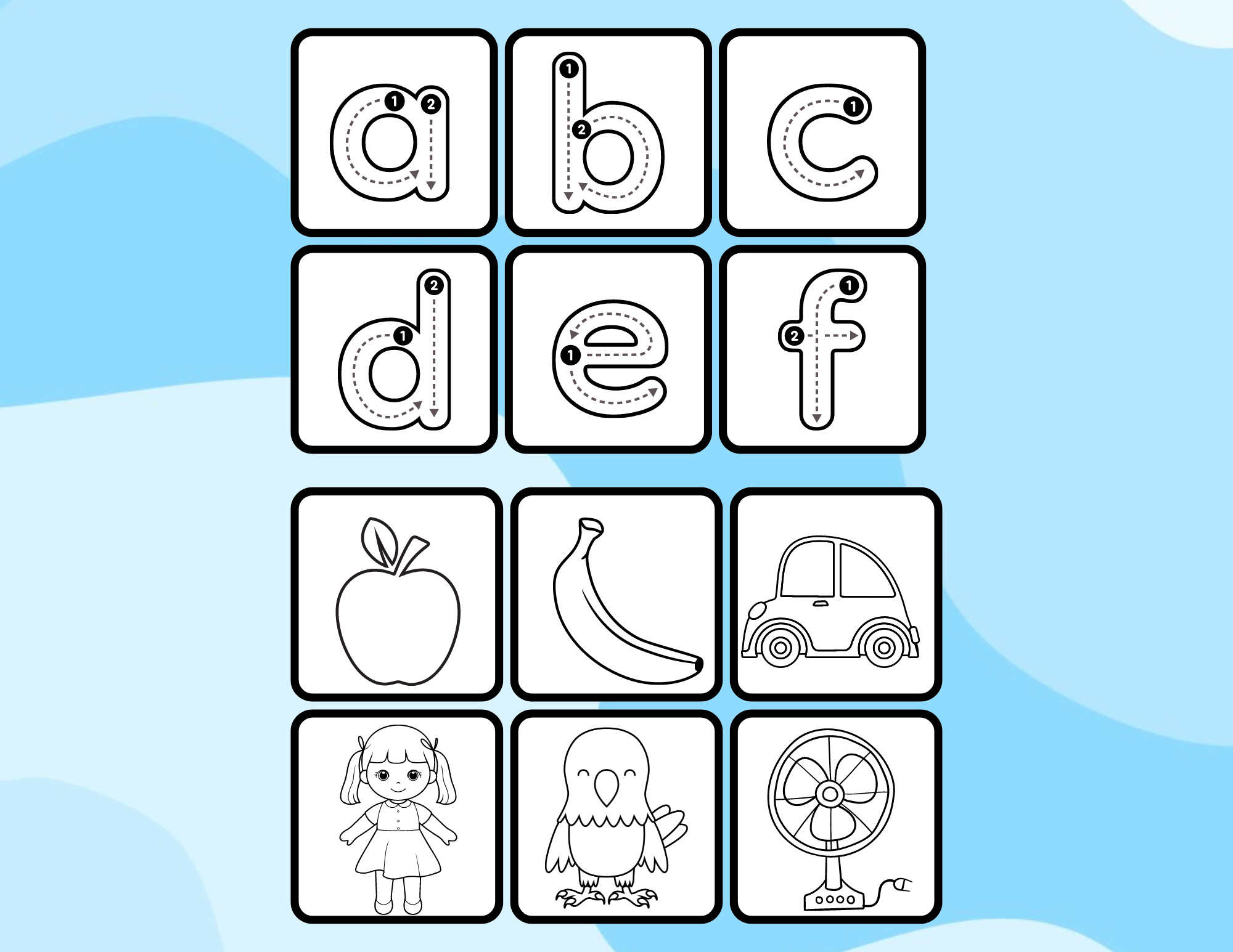
If you read the book Yardsticks, you will learn that six year olds check in with adults often, are curious and talkative, need rituals, lots of movement and planned rest periods. One thing the book doesn’t go into is their resistance to writing their letters from the top to the bottom. Whether this skills is developmentally appropriate or not is a question my team and I wondered a lot with our first graders, but regardless, it’s a skill that’s necessary as they grow into better spellers, and faster writer.
Benefits of Writing Letters from Top to Bottom
Readability: Top to bottom letter formation ensures that text is easily readable.
Consistency: Maintaining a top-to-bottom approach helps keep the text consistent in appearance.
Ergonomics: Writing from top to bottom allows for a natural hand movement, reducing strain and fatigue on the hand and wrist. For young writers the muscles in the hands and fingers need a lot of use to become strong.
Alignment: Starting at the top and moving downwards helps maintain proper alignment of text. This helps to ensure that lines stay straight, spaced, and neat.
Avoiding Smudging: For right-handed individuals, writing from top to bottom helps avoid smudging the ink as they move their hand down the page. Lefties adjust their hands naturally to avoid streaks.
Teaching Top to Bottom Handwriting
With my first graders, I modeled writing from top to bottom A LOT.
Sky writing/air writing is a really great way for kids to visualize letter formation, and kinesthetically, the movement based practice allows for whole brain learning. All good things. Yet when it was time for my students to get to work… there they would be…. writing bottom to top. All of the redirection in the world couldn’t seem to switch the form.
As my team and I were finishing out the year, we questioned how we should go about attacking letter formation for the next school year. It’s my belief, as mentioned above, that most of the resistance to top to bottom writing is developmental in nature, for which there’s not a lot we can do. So I created a resource that can be used all year, in lots of ways.
Alphabet Writing Letter Cards
- Make a set for each student and have them cut, paste, and keep as their own set
- Send home to parents to use at home when practicing writing
- Place sheets in reusable dry erase pockets to be used in centers
- Use in small groups to decode, and practice proper letter formation
- Cut, paste, and laminate; give to students to play matching games
The more we offer the practice, fingers crossed, it will eventually stick.
Ms. Martha

